The Edge of the Sea Bluffs
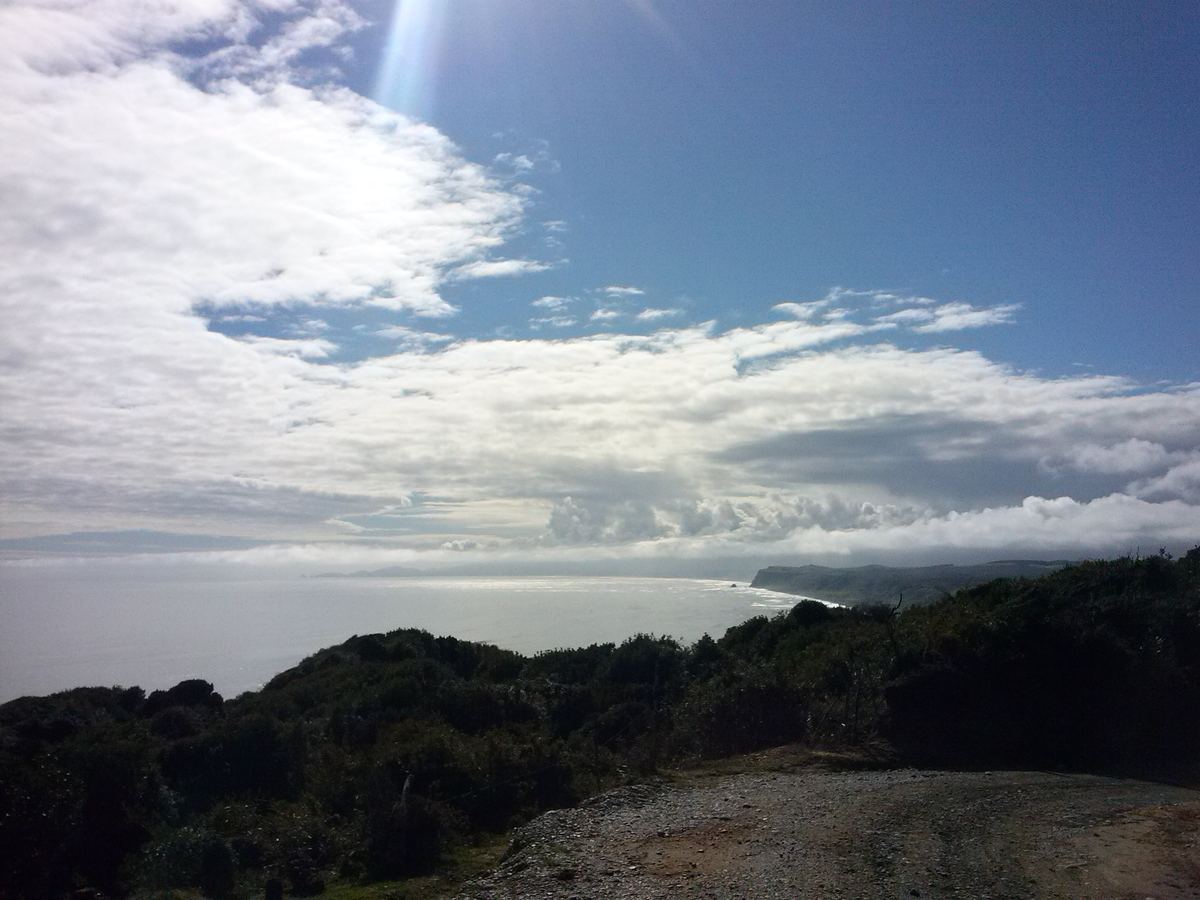
Along the western slopes of the Great Island of Chiloé, the territory forsakes the amphibious mildness of the inland bays to yield to the severity of the open Pacific. After leaving behind the gentle waters that wash Castro's waterfront, the geography grows wild and jagged as it pushes south past Cucao and Rahue, penetrating deep into the bounds of Tepuhueico Park. There, where dark craggy sea cliffs endure the relentless assault of southern ocean swells, the atmosphere becomes saturated with salty sea spray and a dense silence that humbles the walker.
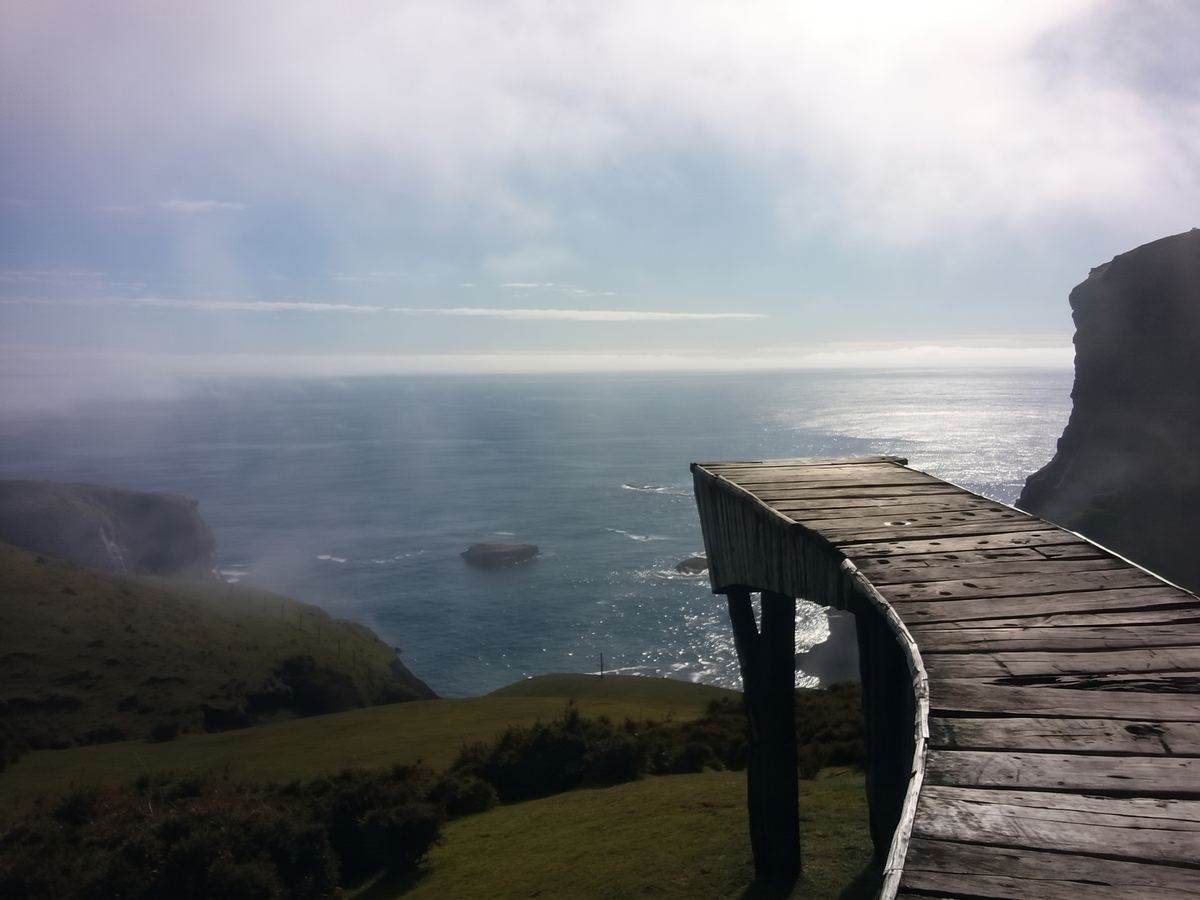
In this secluded frontier sits one of the cornerstone installations of the Land Art sculptural trilogy created by Chilote artist Marcelo Orellana Rivera, known as «Chumono». Beside the Dock of Light high above Chepu and the renowned Dock of Souls at Punta Pirulil, the Dock of Time in Tepuhueico rounds out a poetic dialogue with the island landscape. If the Dock of Souls embodies the tragic and mythical threshold of departure for deceased spirits calling out to boatman Tempilcahue, the Dock of Time stands as an invitation of the opposite nature: a walkway conceived not for leaping into the void or bidding farewell, but for staying, taking a deep breath, and making peace with the present moment.
The Geometry of the Spiral
The architectural language of the work manifests as an assembly of rustic native timber that does not violently break into the promontory, but rather seems to have sprouted from the wind-buffeted soil itself. Unlike a conventional straight pier pointing directly into the chasm, this curved walkway coils back upon itself in an ascending spiral. Its geometry invites an unhurried walk where each step reorients the traveler's perspective, steering the eye gently away from the urgency of the precipice toward the curve of the Earth, the black volcanic reefs, and the sheer vastness of the oceanic horizon.
This geometry symbolizes cyclical time, a concept woven into the bedrock of island life. As the native planks creak under the gusts of the southwesterly wind, the traveler experiences an intimate, contemplative sanctuary. Well sheltered from the viral rush that often surrounds other interventions across the archipelago, the Dock of Time provides a haven of quiet where the rhythmic surge of the breakers becomes the sole clock of your stay.
Travel Logistics from Castro
Setting up your base camp in Castro, along the island's eastern coastline, offers a strategic hub for venturing to the Pacific bluffs. The route crosses the insular spine via Route W-80, skirting the watershed of Lakes Huillinco and Cucao toward Chonchi and the access roads to Tepuhueico. Leaving the main asphalt road behind, the journey transitions into a hiking trail traversing millennial peat bogs—vital carbon sinks and water reserves swathed in living sphagnum moss—dense ñochas thickets, and coastal grasslands.
-
Vehicle Connection from Castro (Route W-80): From Castro, head south along Route 5 toward Chonchi, then turn west onto paved Route W-80, skirting the lake basin of Huillinco and Cucao in about 50 to 60 minutes.
-
Coastal Trail Inside Tepuhueico Park: An approachable trekking route across coastal forests, live peat bogs, and wind-sculpted pastures (40 to 50 minutes on foot) before opening up to the cliff where the wooden spiral meets the ocean.
During the hike, the only sounds interrupting the solemnity of the temperate rainforest are the solitary call of the chucao tapaculo and the deep rumble of breakers. Tepuhueico Park operates under a private wilderness conservation and regulated-access model, protecting thousands of hectares of pristine native flora. This responsible environmental stewardship ensures safeguards against invasive mass tourism, protecting fragile coastal ecosystems and preserving the quiet reverence the site commands.
Returning to the Hearth of the Station
As twilight descends following an immersion into the untamed Pacific, the return to Castro reconnects the explorer with comforting warmth and thoughtful design. At Pedro Montt 250, directly facing the fjord and steps from Train Plaza, sits Estación Hostel. Slipping out of hiking boots damp with sea spray and coastal drizzle initiates the restorative evening ritual in this heritage refuge lined in traditional wooden shingles.
The common areas at Estación Hostel greet guests with an enveloping atmosphere crafted from reclaimed native timbers and accented by our signature color identity. Deep Fjord Blue evokes the serenity of ocean depths, while warm Live Rust pays homage to the iron heritage of the railway, noble woods, and glowing woodstoves. Lounging beside the large picture windows with a hot cup of specialty coffee and high-speed fiber-optic Wi-Fi to update your travel journal, you can watch the low tide reveal the tidal bed of the fjord, bringing your day to a gentle close along with the sea's unhurried rhythm.
Continue Exploring the Logbook

Chiloé is not traveled in haste; it is inhabited in the exact instant where the earth meets the ocean.
Make our boutique design hostel in Castro your starting point to contemplate time from the fjord.
Book Your Station