The Echo at Punta Pirulil
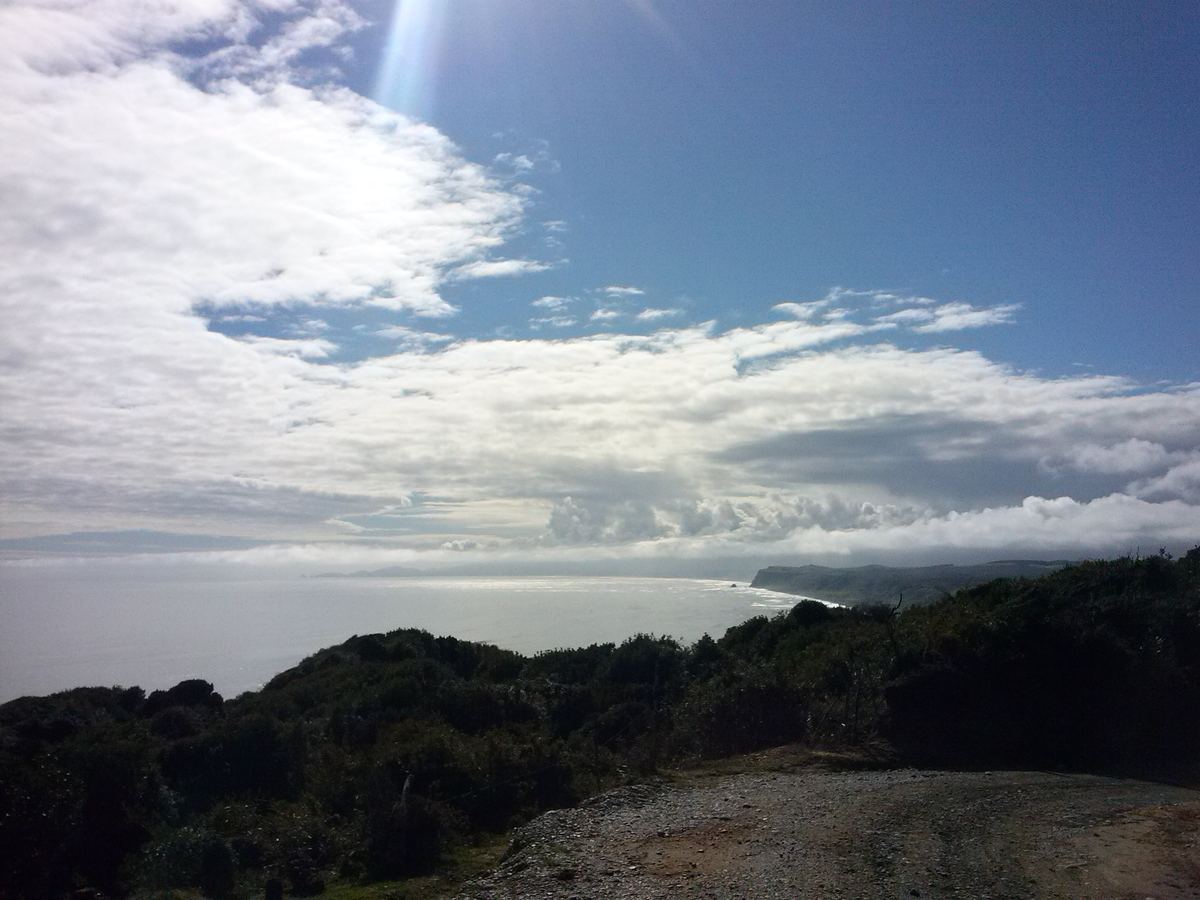
On the western coast of the Great Island of Chiloé, where wind-beaten meadows plunge into the rocky cliffs of Rahue, the landscape sheds the amphibious calm of the inland channels. While along Castro's waterfront the tides rise and fall with the temperate rhythm of the sheltered sea realm, Punta Pirulil—situated south of Chiloé National Park—reveals the raw might of the Pacific Ocean in its most untamed, telluric expression.
This headland, battered by salty sea spray, has stood since time immemorial as the sacred threshold of Huilliche worldview: the natural frontier separating the terrestrial world of the living from the unfathomable horizon of the dead.
The Myth of Tempilcahue and the Weeping of the Departed
Ancestral island memory holds that upon leaving their mortal coil, spirits (or pullis) must embark on a pilgrimage toward the westernmost edge of the sea. Standing on the high bluffs of Punta Pirulil above the abyss, the departed must cry out into the depths: «Boatman!». Attentive to the summons, old Tempilcahue emerges from the foamy swell in his white skiff. In exchange for safe passage to the sea stacks along the horizon—their final resting place—the entity must pay him with llancas, small polished green or blue stones buried alongside the deceased.
Any traveler who dared cheat the boatman in life or lacks these ritual stones faces the sternest retribution. Barred from crossing to the shores of repose, their souls are condemned to wander among the crevices of the cliffs. When the southwesterly gale screams against the crags, locals hear not the mere buffet of the storm, but the bitter, lamenting cries of wandering spirits still pleading for passage across the surf.
Chumono's Sculpture and Mindful Travel Reflection
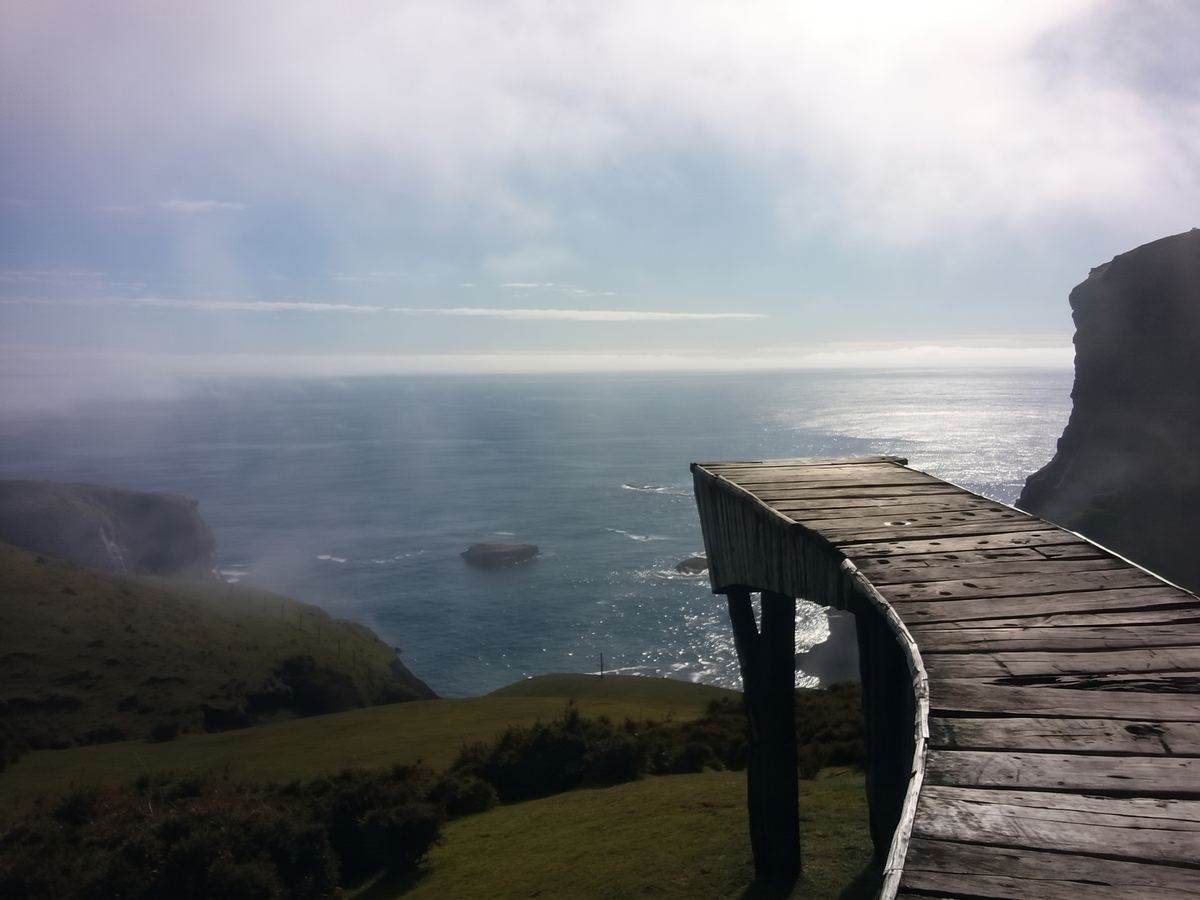
Over this ancient landscape stands the famed land art intervention by sculptor Marcelo Orellana Rivera («Chumono»). Far from being a pretentious monument imposing itself upon the cliffside, his curved walkway of native timber projects outward, suspended over empty space and blending seamlessly into the contours of the pasture. The sculpture serves as an act of farewell and a quiet invitation to reflect: it leads to no physical platform of conquest, but rather to a symbolic dissolution into the sheer vastness of the southern hemisphere.
In our modern era, characterized by digital haste and the compulsion for superficial photo trophies, Punta Pirulil's sacred aura is too often disrupted by crowds queuing up for a quick selfie. Yet for the mindful traveler committed to regenerative exploration, Chumono's work demands the opposite ritual: halting one's steps, quieting one's voice, and keeping a respectful silence upon timbers weathered by brine.
This sculpture forms part of a remarkable conceptual trilogy carved by the artist across Chiloé—alongside the Dock of Light on the heights of Chepu and the Dock of Time in Tepuhueico Park—tracing a poetic circuit of contemplation and harmony with the elements.
Logistics from Castro: The Strategic Base Camp
Basing your journey in Castro provides the ideal springboard for connecting with the spiritual geography of the southern Pacific. The route sets out from the island's eastern waterfront, crossing the insular spine through the watershed of Lakes Huillinco and Cucao via Route W-80. It is a scenic, paved journey of roughly 60 minutes by vehicle or public transit, skirting placid lake waters, dense native forest slopes, and trailheads wrapped in rainforest moisture.
-
Transit Connection from Castro to Cucao: From the Castro Municipal Bus Terminal, regular rural coaches (Buses Ojeda and Expreso Cucao) depart hourly, tracing the lake basin to the coastal entrance in roughly 50 to 60 minutes.
-
Coastal Trek Across Pastures and Bluffs: Upon reaching the Rahue sector, the road yields to a moderate coastal foot trail (45 to 60 minutes on foot) traversing meadows where sheep graze, dense quilineja thickets, and peat bogs exposed to oceanic mists.
Returning to the Hearth of the Station
After confronting the rigorous gales of the Pacific, returning at dusk to the urban shelter of Castro restores both thermal comfort and sensory calm. At Pedro Montt 250, directly overlooking the city's fjord, Estación Hostel welcomes you with the comforting warmth of reclaimed native timbers and weather-tight shingle craftsmanship. Peeling off wind-chilled layers damp from sea mist and settling into the hostel's common lounges allows you to unhurriedly process everything experienced at the island's western edge.
The interior architecture honors the Chilote habitat through its curated color scheme: deep Fjord Blue echoes the depths of the open sea, while warm Live Rust pays homage to weathered iron hardware, native woods, and glowing woodstoves. Taking a seat beside the large picture windows overlooking Train Plaza with a hot cup of specialty coffee, while the low tide reveals the seabed of the fjord, provides the perfect sanctuary to write in your logbook, organize your photographs, or simply watch the calm pulse of the tides.
Continue Exploring the Logbook

One does not travel to the edge of the sea for a postcard; one travels to entrust a question to the wind.
Make our boutique design hostel in Castro your home base to decipher Chiloé’s mythic threshold.
Book Your Station